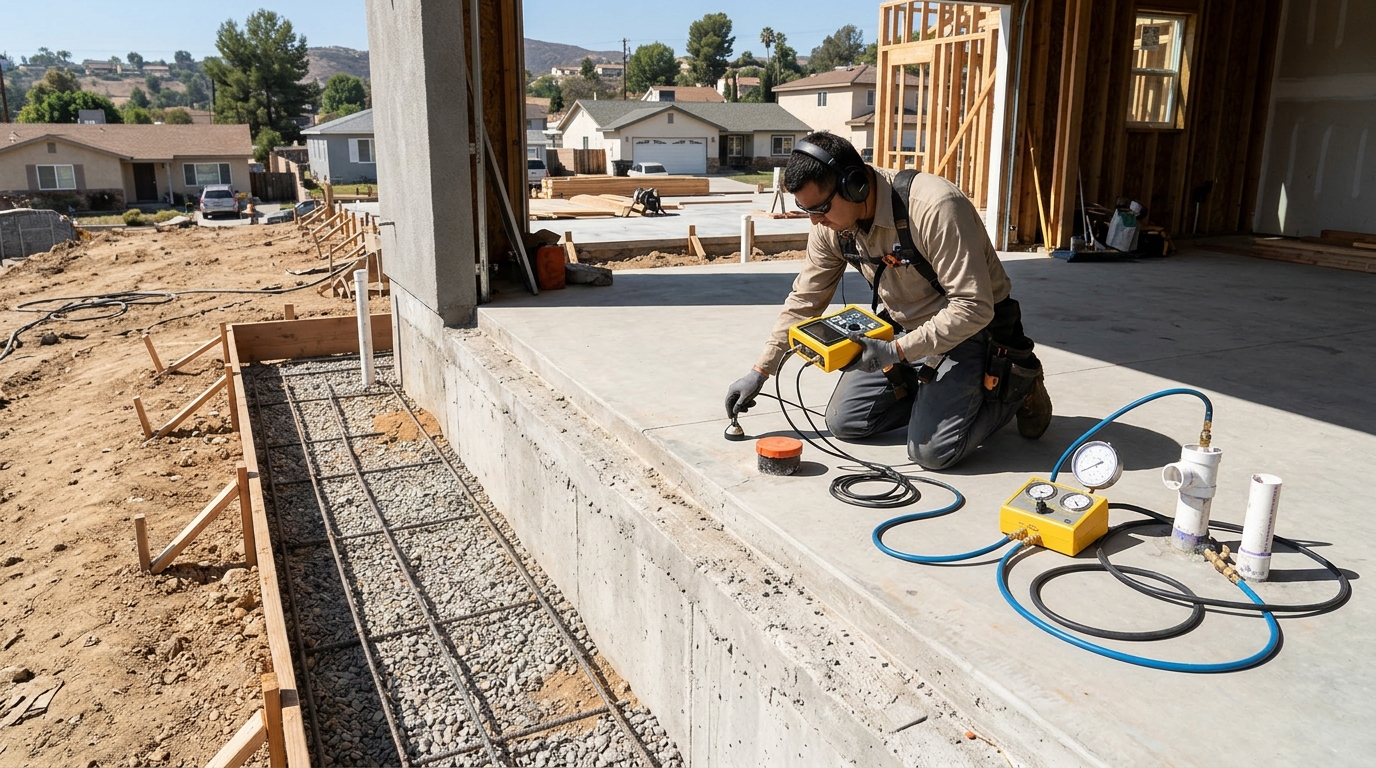
Navigating Homeowners Insurance Claims for Foundation Leaks
Dealing with a pressurized water pipe breach beneath a concrete foundation is overwhelming enough without navigating confusing insurance terminology. Homeowners in Encinitas frequently ask whether property insurance covers foundation plumbing failures. While every insurance carrier and individual policy contract differs, having precise technical documentation is universally recognized as the single most important factor when filing a slab leak insurance claim Encinitas property owners submit.
Disclaimer: The information provided on this page represents general industry experience and educational guidance. It does not constitute formal legal or licensed insurance advice. Policy coverage terms vary; property owners must review their specific policy endorsements and consult directly with their insurance carrier or adjuster.
How Policies Typically Treat Foundation Leak Components
When considering does homeowners insurance cover slab leaks Encinitas residents should understand the three distinct legal and mechanical categories insurers evaluate:
- Tear-Out and Access Costs: Under many standard HO-3 and comprehensive California property policies, the cost required to access the leak—including electronic leak detection, cutting concrete, or accessing wall cavities to allow the repair—is frequently covered under the "access" or "tear-out" provision.
- The Physical Plumbing Pipe (Often Excluded): Insurance companies typically consider the pipe itself to have failed due to age, wear, tear, or corrosion. Therefore, the actual physical repair of the copper pipe (such as the solder coupling or PEX bypass material) is often considered routine homeowner maintenance and may not be reimbursed.
- Resulting Water Damage (Commonly Covered): Damage caused by sudden water release—such as warped hardwood flooring, saturated carpets, mold remediation, soaked drywall, and cabinet replacement—is widely covered under standard water damage provisions, subject to policy deductibles.
Essential Documentation We Provide for Adjusters
Insurance adjusters base their coverage determinations on clear physical facts. We provide robust slab leak documentation Encinitas claims require, providing an objective, professional engineering package:
- Formal Electronic Leak Detection Report: Clear documentation certifying that an active pressurized leak was detected using calibrated acoustic and electronic instruments, identifying whether hot or cold lines failed.
- Thermal Infrared Imagery: High-resolution color thermal photos showing heat plumes migrating through concrete foundation slabs, providing undeniable visual proof of sub-surface water movement.
- Moisture Mapping Readings: Calibrated percentage moisture levels recorded in baseboards, drywall studs, and subfloors throughout the affected premises.
- Schematic Layout Diagrams: A structural diagram noting where the breach occurred relative to load-bearing walls, kitchens, or bathrooms, explaining why an overhead slab leak reroute or spot repair was necessary to access or bypass the pipe.
- Itemized Separation of Costs: Clearly segregated invoices separating diagnostic locating fees, access tear-out labor, resulting drywall work, and direct pipe materials.
Steps Homeowners Should Take Immediately
If you suspect active water movement beneath your foundation, follow these recommended procedural steps:
- Step 1: Mitigate Further Loss: Close the main water shutoff valve immediately when water is actively spreading. Insurance policies require property owners to take reasonable steps to prevent progressive damage.
- Step 2: Capture Visual Evidence: Take clear photographs and video recordings of standing water, swollen baseboards, bubbling paint, or damp flooring before any cleanup begins.
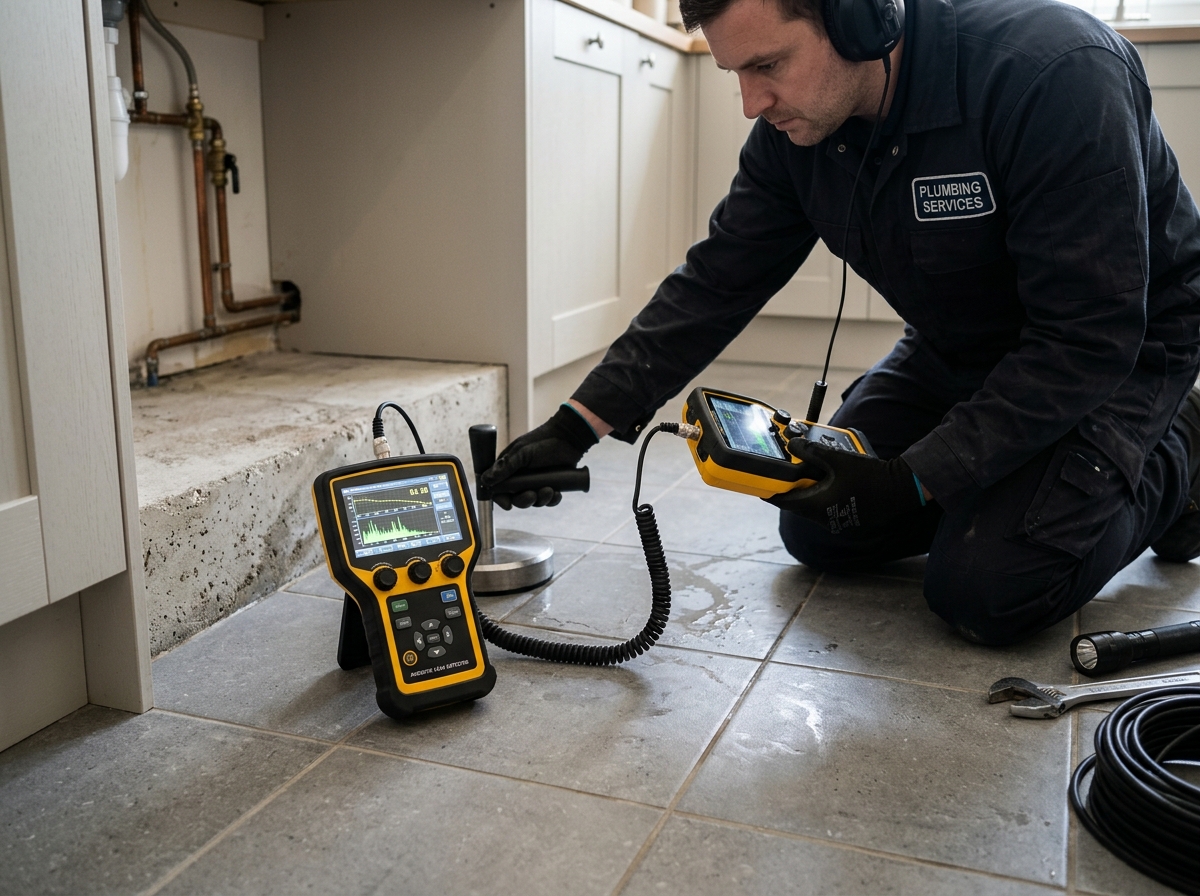
- Step 3: Schedule Professional Electronic Diagnostics: Have a specialized leak detection contractor inspect the system and provide a written report confirming the origin and failure mechanism through non-invasive slab leak detection.
- Step 4: Contact Your Insurance Claims Department: Report the loss promptly, share the diagnostic report, and ask about specific water damage deductibles and tear-out limits.
- Step 5: Review Policy Endorsements: Check whether your policy has specific water backup limits, mold remediation caps, or continuous seepage exclusions that require expedited claim handling.
Understanding these steps ensures that whether your situation requires a localized repair, an overhead line reroute, or comprehensive slab leak repair in Encinitas, your claim progresses smoothly with complete factual clarity.
Reroute vs. Floor Demolition for Claims
Insurance companies frequently appreciate overhead reroutes because bypassing an under-slab pipe through the attic costs far less than paying to demolish and replace hundreds of square feet of continuous imported hardwood or travertine tile. Learn how an overhead bypass works on our Slab Leak Reroute page.